Heart attack symptoms in women
Heart disease is often considered a condition that mainly affects men, but the reality is very different. Cardiovascular disease remains one of the leading causes of death among women worldwide, including in India.
Unfortunately, many women fail to recognise the warning signs of heart disease because symptoms in women can often be different from the classic symptoms commonly shown in movies or public awareness campaigns.
While severe chest pain is a well known symptom of heart attack, many women experience subtle or unusual symptoms such as fatigue, nausea, breathlessness, dizziness, jaw pain, or upper back discomfort. These symptoms are frequently ignored or mistaken for stress, acidity, hormonal changes, anxiety, or exhaustion.
As a result, diagnosis and treatment are often delayed, increasing the risk of complications.
Understanding the early warning signs of heart attack in women is extremely important because timely medical attention can save lives and significantly improve recovery outcomes.
In this article, we discuss common heart attack symptoms in women, causes, risk factors, diagnostic methods, treatment options, and preventive heart care measures.
Why Heart Attack Symptoms in Women Can Be Different
Women often experience heart disease differently from men due to hormonal factors, smaller coronary arteries, and differences in pain perception.
In many women:
- symptoms may be milder
- chest pain may not be severe
- symptoms may develop gradually
- discomfort may occur in areas other than the chest
Women are also more likely to experience what is sometimes referred to as a silent heart attack, where symptoms are subtle and easily overlooked.
Because of these differences, awareness becomes extremely important.
Common Heart Attack Symptoms in Women
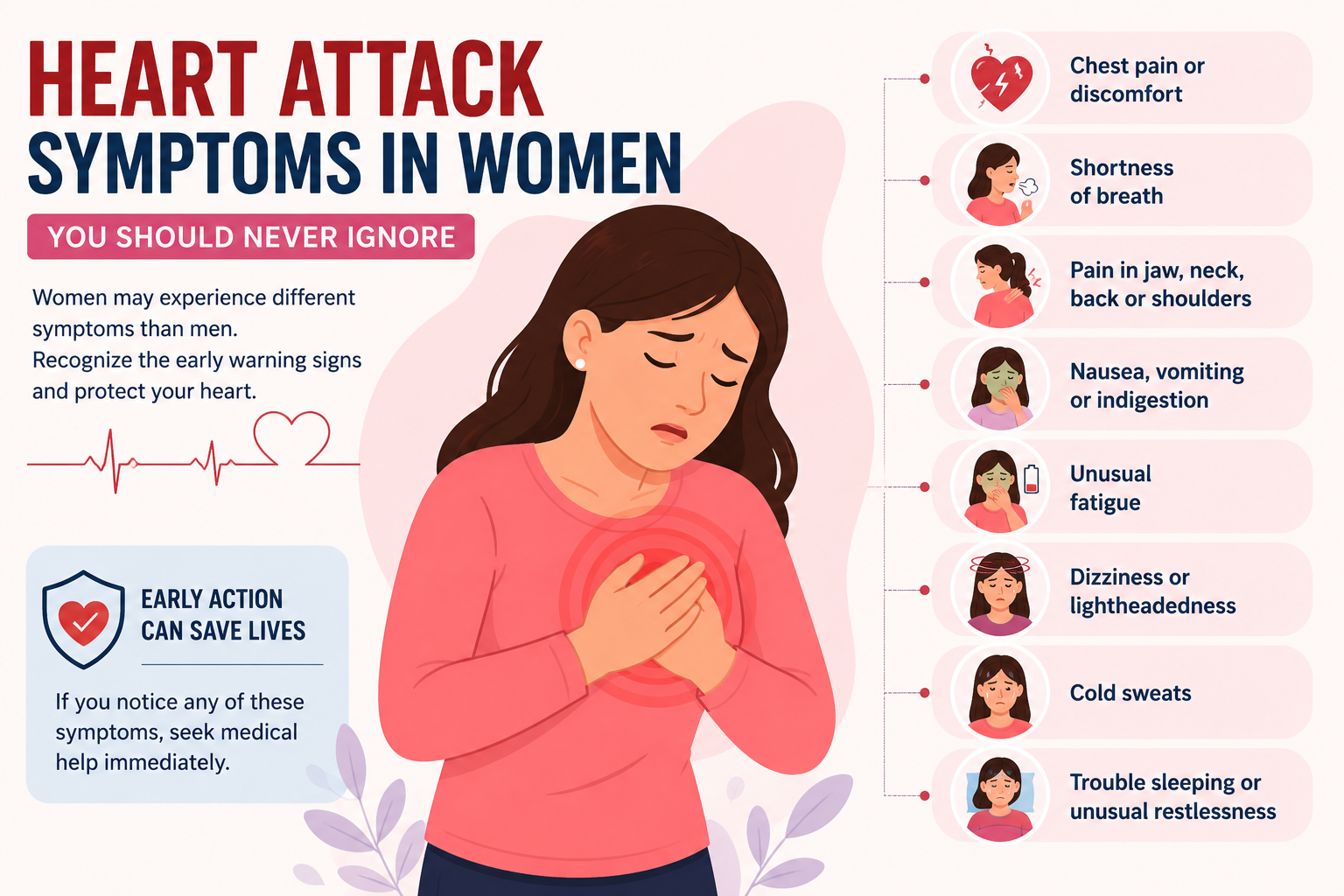
1. Chest Pain or Chest Pressure
Although not always severe, chest discomfort remains one of the most common symptoms.
Women may describe it as:
- pressure in the chest
- heaviness
- squeezing sensation
- burning discomfort
- tightness in the chest
The discomfort may come and go and may sometimes feel less dramatic than expected.
2. Unusual Fatigue
Extreme tiredness without obvious reason is one of the most overlooked symptoms in women.
Many women experience:
- unusual exhaustion
- low energy levels
- weakness during normal activities
- fatigue lasting several days
Some women report feeling exhausted even after adequate rest.
3. Shortness of Breath
Breathlessness may occur:
- during physical activity
- while climbing stairs
- during normal routine activities
- sometimes even at rest
Difficulty breathing without obvious cause should never be ignored.
4. Pain in the Jaw, Neck, Back, or Shoulders
Heart related pain in women may spread to:
- jaw
- neck
- upper back
- shoulders
- arms
This discomfort may feel dull, aching, or persistent.
Many women mistake this pain for muscular strain or cervical issues.
5. Nausea, Acidity, or Indigestion
Heart attack symptoms in women are often mistaken for digestive problems.
Symptoms may include:
- nausea
- acidity
- bloating
- upper stomach discomfort
- vomiting sensation
This confusion sometimes delays emergency treatment.
6. Dizziness or Lightheadedness
Reduced blood flow during a cardiac event may cause:
- dizziness
- feeling faint
- imbalance
- sudden weakness
These symptoms may occur along with fatigue or chest discomfort.
7. Cold Sweats
Women experiencing heart attacks may suddenly develop:
- excessive sweating
- clammy skin
- cold sweats
Sweating associated with chest discomfort or breathlessness requires urgent medical attention.
8. Sleep Disturbances
Some women report:
- difficulty sleeping
- sudden nighttime discomfort
- unexplained restlessness
- unusual anxiety before a cardiac event
Although less recognised, sleep related changes may sometimes occur before heart attacks.
Can Women Have Heart Attacks Without Severe Chest Pain?
Yes.
Many women experience heart attacks without the classic crushing chest pain commonly associated with cardiac emergencies.
Some women may primarily experience:
- fatigue
- nausea
- breathlessness
- dizziness
- back pain
- jaw discomfort
This is one reason why heart attacks in women are sometimes diagnosed later than in men.
Risk Factors for Heart Disease in Women
Several factors increase the risk of heart disease among women.
Common risk factors include:
- diabetes
- high blood pressure
- high cholesterol
- obesity
- smoking
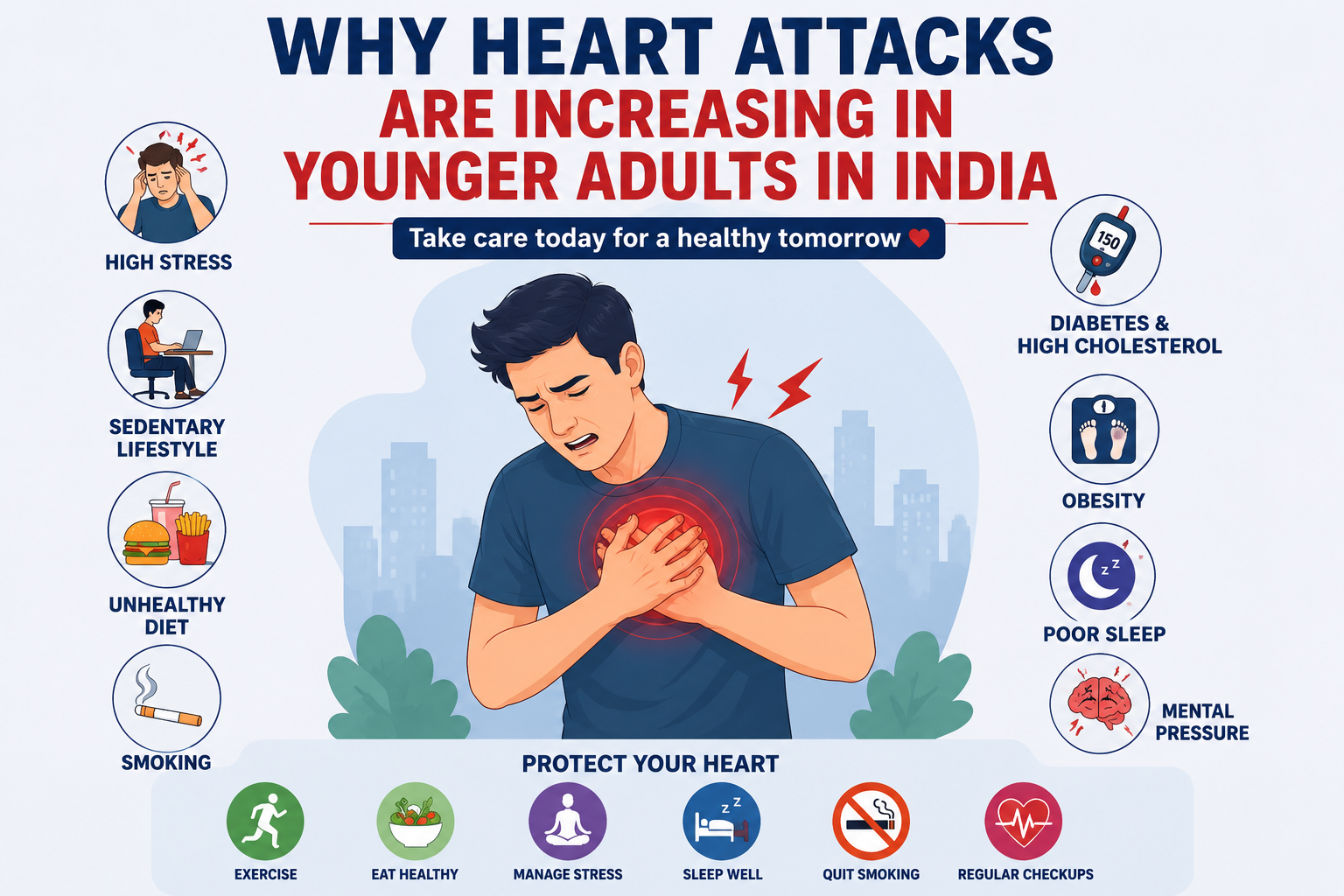
- stress
- lack of exercise
- unhealthy diet
- menopause
- family history of heart disease
- sleep disorders
In India, rising stress levels and sedentary lifestyle patterns are contributing significantly to increasing cardiac risk among women.
How Diabetes Increases Cardiac Risk in Women
Diabetes significantly increases the risk of coronary artery disease.
Women with diabetes may:
- develop heart disease earlier
- experience silent symptoms
- have higher complication risks
- experience delayed diagnosis
Controlling blood sugar levels is extremely important for long term heart health.
Can Younger Women Develop Heart Disease?
Yes.
Heart disease is increasingly affecting younger women due to:
- work stress
- hormonal imbalances
- obesity
- poor sleep
- smoking
- unhealthy eating habits
- sedentary lifestyle
Many younger women ignore symptoms because they assume they are too young for heart disease.
Preventive screening and awareness are becoming increasingly important.
How Are Heart Attacks Diagnosed?
Doctors may recommend several tests depending on symptoms and medical history.
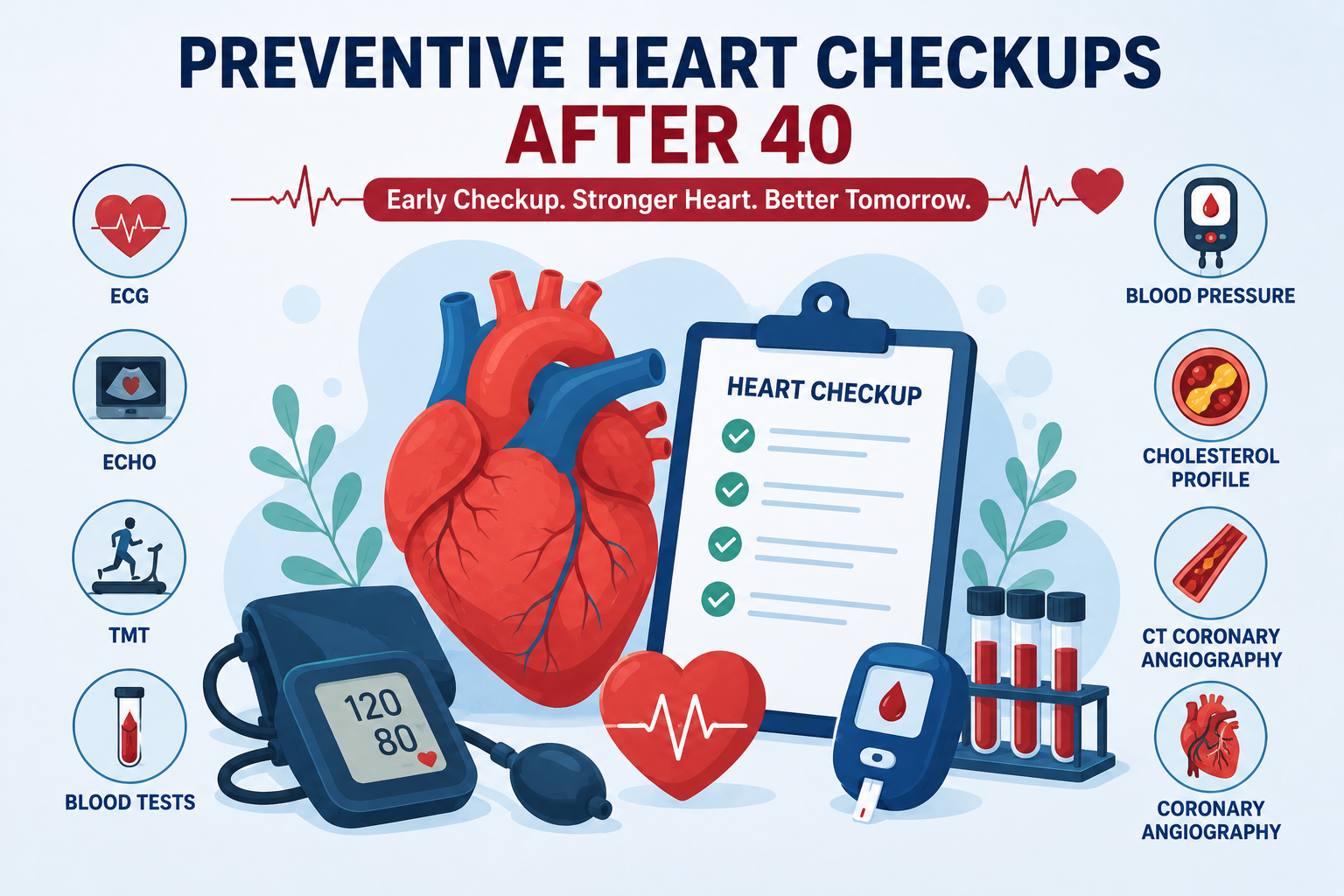
ECG (Electrocardiogram)
An ECG records the electrical activity of the heart and helps identify abnormalities.
ECHO (Echocardiography)
An ECHO evaluates heart structure and pumping efficiency.
Blood Tests
Cardiac enzyme tests help identify heart muscle damage.
TMT (Treadmill Test)
This test evaluates heart function during physical exertion.
CT Coronary Angiography
This imaging test helps identify artery narrowing or blockages.
Coronary Angiography
Coronary angiography remains one of the most accurate procedures for identifying coronary artery disease.
Treatment Options for Heart Disease in Women
Treatment depends on the severity of disease and overall heart health.
Lifestyle Modifications
Important lifestyle changes include:
- healthy diet
- regular exercise
- stress reduction
- smoking cessation
- proper sleep
- weight management
Medications
Doctors may prescribe:
- cholesterol lowering medications
- blood pressure medicines
- blood thinners
- diabetes management medications
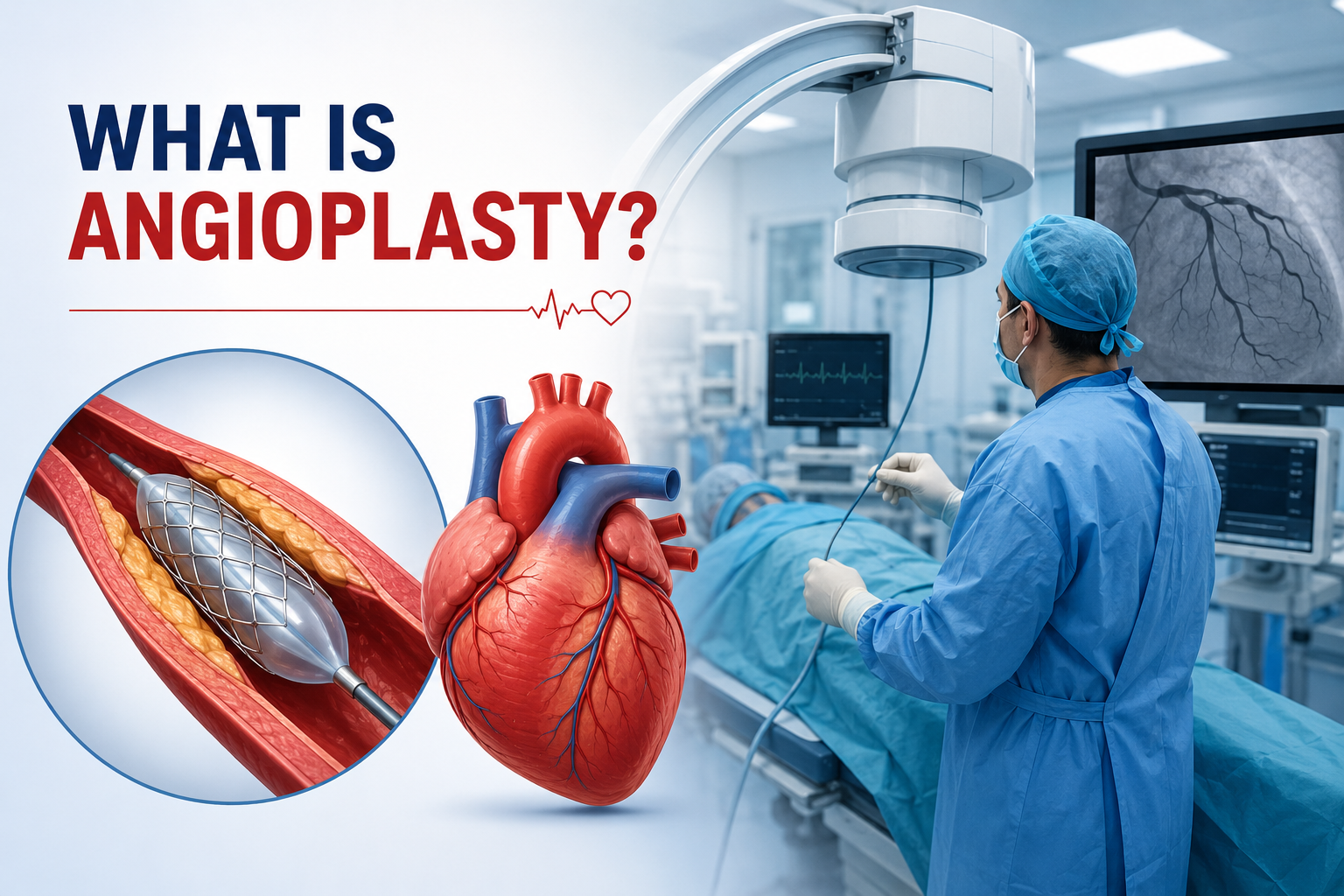
Angioplasty and Stenting
In significant artery blockages:
- narrowed arteries are opened using balloons
- stents are placed to restore blood flow
Bypass Surgery
Severe or multiple artery blockages may require bypass surgery.
How Women Can Protect Their Heart Health
Preventive care plays a major role in reducing cardiac risk.
Important steps include:
- regular exercise
- balanced nutrition
- controlling diabetes and BP
- stress management
- adequate sleep
- avoiding smoking
- maintaining healthy cholesterol
- regular preventive heart checkups
Women should never ignore persistent symptoms or unusual fatigue.
When Should Women Seek Emergency Medical Attention?
Immediate medical care is necessary if symptoms include:
- chest heaviness
- breathlessness
- sweating
- jaw pain
- arm pain
- dizziness
- fainting
- symptoms worsening during activity
Early diagnosis and treatment can save lives.
Why Choose Cardea Superspeciality Hospital?
At Cardea Superspeciality Hospital, we focus on comprehensive, patient first, and advanced cardiac care supported by experienced specialists and modern infrastructure.
Our cardiac services include:
- preventive cardiology
- ECG and ECHO evaluations
- treadmill testing
- advanced cardiac diagnostics
- coronary angiography
- angioplasty and stenting
- emergency cardiac care
- personalised treatment planning
With experienced cardiologists, advanced Cath Lab facilities, and compassionate care, Cardea supports women through every stage of heart health management.
Frequently Asked Questions About Heart Attack Symptoms in Women
Yes. Women often experience subtle symptoms such as fatigue, nausea, jaw pain, or breathlessness.
Yes. Some women may experience heart attacks without severe chest pain.
Yes. Chronic stress can increase blood pressure and cardiac risk over time.
Women above 40 years, or younger women with risk factors, should consider preventive cardiac screening.
Yes. Lifestyle related risk factors are increasing heart disease among younger women.
Immediate medical evaluation is necessary, especially if symptoms include breathlessness, sweating, chest discomfort, or dizziness.
Conclusion
Heart attack symptoms in women are often subtle, unusual, and easily overlooked.
Symptoms such as fatigue, breathlessness, nausea, jaw pain, dizziness, or chest heaviness should never be ignored, especially in women with diabetes, stress, obesity, hypertension, or family history of heart disease.
Recognising warning signs early and seeking timely medical attention can help prevent serious cardiac complications and improve recovery outcomes.
With increasing cardiac risk among women of all age groups, awareness, preventive screening, and heart healthy lifestyle habits have become more important than ever.